Showing posts with label new books. Show all posts

Wednesday, November 19, 2014

New books in the Rhodes Library: a selection


BBC Scotland, 2012. How to grow a planet, BBC Worldwide Ltd
Do yourself a favour and make a point of watching this documentary -  excellent.
We might think humans are the most powerful living thing on Earth, but it's plants that time and again have set the agenda for life. All animals rely on plants for their survival. This is not an accident - they are the most powerful evolutionary force on Earth. Plants enabled amphibians to leave the water, they had a hand in the rise and fall of the dinosaurs, and they ensured the ultimate triumph of insects, mammals, birds and even us - all for their own benefit. Because plants have only ever had one goal - the total domination of the planet. It is a story of ruthless ingenuity, seduction and deception; of unimaginable power and ambition. An epic tale, How to Grow a Planet offers a stunning new perspective on Earth history.

      Climatologist Hansen, director of the NASA Goddard Institute for Space Studies and an internationally renowned global-warming expert, became even more famous when he was censored by the Bush administration. After decades of studying the role fossil fuels play in global warming and witnessing the federal government’s failure to take action to lower carbon emissions, he felt compelled to write his first book out of concern about the potentially catastrophic future facing his grandchildren. Hansen condemns governmental “greenwashing” and the undue influence of more than 2,300 energy lobbyists, and attempts to close the gap “between public perception and scientific reality” by lucidly explaining the dynamics of global warming, its acceleration, and how a slight rise in temperature can lead to disastrous consequences. He then boldly declares that the way to solve the climate crisis is to “rapidly phase out coal emissions.” How will we meet our energy needs without coal? Hansen tells the “secret story” of the jettisoned “fast” nuclear reactor, a safer and more efficient reactor than those currently in use, and advocates for its resurrection. Rich in invaluable insights into the geopolitics as well as the geophysics of climate change, Hansen’s guaranteed-to-be-controversial manifesto is the most comprehensible, realistic, and courageous call to prevent climate change yet. It belongs in every library. --Donna Seaman

Huntley, B.J., 2012. Kirstenbosch: the most beautiful garden inAfrica, Cape Town, South Africa: Struik Nature.
This beautiful coffee table book, written by acclaimed South African ecologist Professor Brian Huntley, was published in honour of the Kirstenbosch Botanical Gardens' centenary. Through vivid photographs, art work, valuable archive material and the author’s detailed, yet accessible writing style, Huntley tells the tale of a garden that has captured the hearts of many people for centuries.


Pääbo, S., 2014. Neanderthal man: in search of lost genomes, New York: Basic Books, a member of the Perseus Books Group.
      “It is a rare thing to read about an important development in science by its principal innovator, written in the spirit and style in which the research unfolded. Neanderthal Man is a dispatch from the front, and if you want to learn how real science is really done, I suggest you read it.”
Edward O. Wilson, University Research Professor, Emeritus, Harvard University

Tin, T. ed., 2014. Antarctic futures: human engagement with theAntarctic environment, Dordrecht; New York: Springer.
      “Antarctic Futures, based on a session held during the Oslo Science Conference (Norway) in 2010, focuses on the impact of human activities and regional environmental change in the polar regions … . Broad and thoughtful in its approach, this work is a noteworthy addition to the expanding canon of analyses of the human impact on and the future of Antarctica. Summing Up: Recommended. Upper-division undergraduates through professionals/practitioners.” (H. Doss, Choice, Vol. 51 (11), August, 2014)

Wilson, E.O., 2014. A window on eternity: a biologist’s walk through Gorongosa National Park First Simon & Schuster hardcover edition., New York: Simon & Schuster.
     
“Wilson describes in language that is both poetic and scientific a kind of parable of what is possible in the realm of environmental protection. . . . By destroying the natural world, we are destroying ourselves. Our blindness to this reality is the most crucial and fundamental fact of the world today. A Window on Eternity brings this reality into focus in a lucid and disarmingly gentle manner. It is a fitting capstone to Wilson's exceptional career.” (David Edmund Moody The Huffington Post)

     
Osseo-Asare, A.D.A., 2014. Bitter roots: thesearch for healing plants in Africa, Chicago; London: The University of Chicago Press.

“By choosing to investigate colonial and postcolonial science through scientific work with plant medicines, Abena Dove Osseo-Asare deepens our understanding of the power relations not only between African and European or American scientists but also between healers and these indigenous and foreign scientists. Her detailed account of transnational scientific collaborations will be a lasting contribution to the field of science studies.” (Stacey Langwick, Cornell University)


Friday, May 16, 2014

A selection of new books in the RU Library

What is chemistry? by Peter Atkins. Oxford, United Kingdom : Oxford University Press, 2013.
....an excellent primer on chemistry. The reader will not receive a degree in chemistry but should gain a fairly comprehensive background on the subject. To many people, chemistry has an "unhappy reputation," and Atkins aims to dispel the concept. He illuminates the good points and covers the downsides, largely due to misapplications of chemistry and technology. (Choice Reviews)

Petersen, Jens H., The kingdom of fungi / Jens H. Petersen. Princeton University Press, 2012.
One of Choice's Outstanding Academic Titles for 2013
"An instant classic. . . . The book's 800+ photographs accomplish a singular feat: they display the diagnostic features of a particular species--gill attachment or lack thereof, apothecial hairs, etc.--without sacrificing esthetics. . . . The text is remarkable, too. It describes the ecology and biology of fungi, where fungi grow, and human interactions with fungi."--Lawrence Millman, Boston Mycological Club Bulletin

Bauman, Zygmunt, .Does the richness of the few benefit us all? Cambridge, UK : Polity Press, 2013.
It is commonly assumed that the best way to help the poor out of their misery is to allow the rich to get richer, that if the rich pay less taxes then all the rest of us will be better off, and that in the final analysis the richness of the few benefits us all. And yet these commonly held beliefs are flatly contradicted by our daily experience, an abundance of research findings and, indeed, logic. Such bizarre discrepancy between hard facts and popular opinions makes one pause and ask: why are these opinions so widespread and resistant to accumulated and fast-growing evidence to the contrary?

The Princeton guide to evolution / Jonathan B. Losos, Harvard University, editor in chief. Princeton ; Oxford : Princeton University Press, 2014.
This comprehensive reference covers an enormous breadth of information on the major subjects and key concepts in evolutionary biology. Seven sections cover the major topics in evolution: “Phylogenetics and the History of Life”; “Natural Selection and Adaptation”; “Evolutionary Processes”; “Genes, Genomes, and Phenotypes”; “Speciation and Macroevolution”; “Evolution of Behavior, Society, and Humans”; and “Evolution and Modern Society.” Each section begins with a concise introduction and is then further divided into scholarly articles ranging from 5 to 12 pages in length. These signed articles discuss the fossil record, natural selection, experimental populations, gene duplication, various behaviors in both animals and humans, and more. Notably, each article includes an outline, a glossary section specific to that topic, and a bibliography. There are black-and-white line drawings, tables, and charts scattered throughout and a section of six color plates. The list of international contributors consists of leading evolutionary biologists from a variety of academic institutions. This dense and scholarly title is appropriate for most academic libraries serving upper-level science programs. --Rebecca Vnuk (Booklist)

Love and math : the heart of hidden reality / Edward Frenkel.New York : Basic Books, 2013.
U.C. Berkley mathematician Frenkel reveals the joy of pure intellectual discovery in this autobiographical story of determination, passion, and the Langlands program—a sort of Grand Unified Field Theory of mathematics. As a teenager Frenkel was converted from math hater to eager theorist by a mathematical friend of the family, enough to pursue it despite his struggles against an unapologetically anti-Semitic Soviet educational system. Frenkel writes casually of climbing over the fence to sit in on advanced classes at Moscow State University, a top school that didn&'t accept Jews. With the help of mentors, he worked hard and eventually found his way to Harvard and the freedom to focus on his research. Frenkel balances autobiographical narrative with enthusiastic discussions of his own work on the Langlands program, a web of algebraic conjectures named after a Canadian mathematician that is noted for its usefulness in organizing seemingly chaotic data into regular patterns full of symmetry and harmony, and its applications to quantum theory. While the math can be heavy going, Frenkel&'s gusto will draw readers into his own quest, pursuing the deepest realities of mathematics as if it were a giant jigsaw puzzle, in which no one knows what the final image is going to look like. (Publishers Weekly)

Our once and future planet : restoring the world in the climate change century / Paddy Woodworth.Chicago ; London : he University of Chicago Press, 2013.
“Woodworth gives a stirring portrait of the hardworking environmentalists who are trying to restore landscapes to their former, untouched glory, but he also captures the dark side of the enterprise: it sometimes requires the brutal destruction of very large numbers of invasive species to make room for long-departed native ones. Restoration is also basically guesswork, Woodworth notes, because most of us have never actually experienced nature at its most pristine. Ultimately, he ends up wondering whether we can ever hope to restore ‘degraded ecosystems, and our own damaged relationship to the environment.’”
(Scientific American)
 "Outstanding: Paddy Woodworth has opened a broad and major window to the world of ecosystem restoration and its restoration biologists, for those of us who do it, know it, and the public who needs it.  He does this by actually taking the time to meet the practitioners, users and evaluators of restoration projects and their aftermaths, and cast a reporter's unjaundiced commentary about them. Woodworth understands, documents, and dissects the mandatory integration of the restoration project with its users, its producers and its likely future fate. He does this not by counting how many species of birds or trees are present or absent, but through unveiling the normal synergies—and antagonisms—that exist among any array of humans focused on a particular 'solution' to a biologically destructive assault on the wild world. The single largest problem with restoration, and Woodworth knows and portrays this problem very well, is persuading some significant portion of society to stop the assault that generated the need for restoration, let nature take possession again of the site and its processes, and stimulate the next generation to allow the continuity of that non-human possession. Sure, this is the world through Woodworth’s glasses, but that is what writing is all about . . . marvelous prose."     (Daniel Janzen, University of Pennsylvania)

Africa's moment/ Jean-Michel Severino &Olivier Ray. Cambridge ; Malden, MA : Polity Press, c2011.
"A wake-up call. Its message is simple: look out world, here comes Africa." (Wall Street Journal)
"Clearly conceived, cleanly structured, tightly written and lucidly expressed. A highly readable text."
(European Voice)
"Their optimistic analysis of the continent and its inhabitants should be read by all who are interested in looking at Africa with a fresh and different perspective." (African Security Review)
"A significant book for those interested in questions of economic and cultural change." (The Age)
"Africa's Moment has the great value of underlining that Africa's future is indeed in the hands of Africans." (South World)
"A timely and positive assessment of Africa's prospects founded upon deep understanding and a distinctive perspective." (Paul Collier, University of Oxford)
"The West is wedded to a retrograde vision of Africa's past and know nothing of its present, even less of its  future. This unprecedented book forces revision of that outlook by addressing a world, just a few decades from now, where one in four human beings will be African." (Keith Hart, University of London)

Waste : a handbook for management / edited by Trevor Letcher, Daniel Vallero, Netherlands : Elsevier/Academic Press, c2011.
Gives the broadest, most complete coverage of waste in our society. The book examines a wide range of waste streams, including: Household waste (compostable material, paper, glass, textiles, household chemicals, plastic, water, and e-waste) ;  Industrial waste (metals, building materials, tires, medical, batteries, hazardous mining, and nuclear); Societal waste  (ocean, military, and space); The future of landfills and incinerators .  Covering all the issues related to waste in one volume helps lead to comparisons, synergistic solutions, and a more informed society. In addition, the book offers the best ways of managing waste problems through recycling, incineration, landfill and other processes. (Trevor Letcher is an ex-Rhodes academic).

Wednesday, April 23, 2014

Highlighting some newish books/DVDS in the Rhodes Library

Higgs Force takes a new approach to contemporary physics, and makes notoriously difficult material accessible and approachable, very readable and entertaining. --Tony Mann, President of the British Society for the History of Mathematics

A delightfully readable and accessible account of the search for the force which ensures that there is something rather than nothing in the Universe. --John Gribbin

Every so often, physics gets sexy. The Big Bang and black holes regularly grab the headlines, and, more recently, something else has become the latest scientific superstar the God Particle. Higgs Force aims to do for the Higgs boson what Stephen Hawking did for the black hole. --Guru Magazine

.. succeeds in clearly conveying the key concepts in this vast field without ever becoming a tedious read and I would be surprised if it does not quickly shoot to the top of undergraduate reading lists. It would also make a welcome addition to the bookshelf of anyone already active in the field either as a quick reference book or a broad refresher on subjects outside their speciality. Highly recommended." - Casey Bryce, reviewer, Astrobiology Society of Britain
  
The wonders of physics / Andrey Varlamov, Lev Aslamazov
"This ability to understand many different things using very few fundamental principles and a rational reasoning lies in the heart of physics, great science about fundamental laws of Nature. Very few authors are able to speak about these fundamentals to the laymen. The authors of this book can. Read the book and enjoy it." -- Prof D E Khmelnitskii, Cavendish Laboratory, Cambridge, UK

"This is an informal, charming, and idiosyncratic book with a strongly personal choice of topics. Overall, a well-written, engaging text covering both nonstandard and appropriate subjects." -- CHOICE


Global environmental history : an introductory reader / edited by John R. McNeill and Alan Roe
"In Global Environmental History, John McNeill and Alan Roe have put together a stimulating ‘canon’ of great readings. Together they explore many of the key themes in the emerging interdisciplinary field of environmental history, which explores past relations between people and environments historically, geographically, ecologically and through following many other disciplinary paths as well. The ‘global synthesis’ will ultimately need the understandings of many scales – global, regional and local – and the readings are organised in a way that considers the insights from each. There will, we hope be more such anthologies to follow. This one is a pioneering collection for an exciting intellectual endeavour."  - Libby Robin, Australian National University, Australia

Big data : a revolution that will transform how we live, work, and think / Viktor Mayer-Schönberger and Kenneth Cukier.
Financial Times Business Book of the Year Finalist
“Illuminating and very timely . . . a fascinating — and sometimes alarming — survey of big data’s growing effect on just about everything: business, government, science and medicine, privacy, and even on the way we think."  —New York Times

Atomic Mumbai : living with the radiance of a thousand suns / Raminder Kaur.
Raminder Kaur gives us a brilliant and compelling account of Mumbai as the maximum atomic city. She leads us through the myriad pathways of nuclear lifeworlds with which she is intimately familiar, illuminating the aspirations, anxieties, desires, and nightmares that saturate everyday existence. Incarnated as science and religion, the material and immaterial, and both poison and cure, Kaur provides a memorable and vividly realised analysis of a key element in the imaginary of modern India. — Christopher Pinney, Department of Anthropology, University College London

A journey in the history of water [DVD] / screenwriter and host, Terje Tvedt ; produced and directed by Terje Dale.
    Tells the story of how the struggle for fresh water has shaped human society, bringing the viewer to about 20 countries all over the world and showing how people have coped with what is societies' lifeblood - water.

Antarctica : global science from a frozen continent / edited by David W. H. Walton
 "This is an excellent review of key multidisciplinary collaborative research and geopolitics in Antarctica involving more than 30 countries, addressing global issues in climate, oceans, biodiversity, solar system, tourism and more. Of importance to contemporary society, it is a valued compendium." - Alan K. Cooper, Consulting Professor, Stanford University and recipient of the second SCAR medal for International Scientific Coordination
"Antarctica is a conundrum. It is distant, yet it will shape our children's future; it is mysterious, yet a treasure trove for science; it is the focus of calculated geopolitical interest, yet the exemplar of 'world governance'. In this well-presented and readable book, the world's leading experts on Antarctic science showcase why the uninhabited seventh continent is central to the present and future of human interests and wellbeing." - Professor Chris Rapley CBE, University College London; former Director of British Antarctic Survey and former President of SCAR


Penguins : natural history and conservation / edited by Pablo Garcia Borboroglu and P. Dee Boersma.
"This is an essential book for those who love penguins. Each of the world's 17 penguin species is beautifully illustrated with full-color photographs of the birds in their natural habitat. Detailed charts, graphs and tables help present interesting and useful information about each species." -Fritz Brock, Wildlife Activist, No. 74, Autumn 2013
 
Relentless evolution / John N. Thompson. 
In Relentless Evolution, John N. Thompson explores why adaptive evolution never ceases and why natural selection acts on species in so many different ways. Thompson presents a view of life in which ongoing evolution is essential and inevitable. Each chapter focuses on one of the major problems in adaptive evolution: How fast is evolution? How strong is natural selection? How do species co-opt the genomes of other species as they adapt? Why does adaptive evolution sometimes lead to more, rather than less, genetic variation within populations? How does the process of adaptation drive the evolution of new species? How does coevolution among species continually reshape the web of life? And, more generally, how are our views of adaptive evolution changing? 

The flame of Miletus : the birth of science in ancient Greece (and how it changed the world) / John Freely.
"This is a magnificent book, covering an extraordinary range of topics and a vast sweep of time. John Freely has lived, written, and taught in Greece, Turkey, and Italy for a lifetime, and this experience has given him the rare ability to tell complex stories in a lucid and engaging manner. This is a book everyone should have." – John Camp, Professor of Archaeology, ASCS, Athens Stavros Niarchos Foundation Professor of Classics, Randolph-Macon College


Thursday, November 14, 2013

Rhodes Library - some recently-added books: a selection

(View all the new titles for the week)

Antarctic ecosystems : an extreme environment in a changing world edited by Alex D. Rogers ... [et al.]. 

 Cover Art


Since its discovery Antarctica has held a deep fascination for biologists. Extreme environmental conditions, seasonality and isolation have lead to some of the most striking examples of natural selection and adaptation on Earth. Paradoxically, some of these adaptations may pose constraints on the ability of the Antarctic biota to respond to climate change. Parts of Antarctica are showing some of the largest changes in temperature and other environmental conditions in the world. In this volume, published in association with the Royal Society, leading polar scientists present a synthesis of the latest research on the biological systems in Antarctica, covering organisms from microbes to vertebrate higher predators. This book comes at a time when new technologies and approaches allow the implications of climate change and other direct human impacts on Antarctica to be viewed at a range of scales; across entire regions, whole ecosystems and down to the level of species and variation within their genomes. Chapters address both Antarctic terrestrial and marine ecosystems, and the scientific and management challenges of the future are explored.


Genetic Roulette: the gamble of our lives (DVD)

Cover Art  

Never-Before-Seen-Evidence points to genetically engineered foods as a  major contributor to rising disease rates in the US population, especially  among children. Gastrointestinal disorders, allergies, inflammatory diseases,  and infertility are just some of the problems implicated in humans, pets,  livestock, and lab animals that eat genetically modified soybeans and corn.


Near-Earth objects : finding them before they find us / Donald K. Yeomans. Cover Art

Of all the natural disasters that could befall us, only an Earth impact by a large comet or asteroid has the potential to end civilization in a single blow. Yet these near-Earth objects also offer tantalizing clues to our solar system's origins, and someday could even serve as stepping-stones for space exploration. In this book, Donald Yeomans introduces readers to the science of near-Earth objects--its history, applications, and ongoing quest to find near-Earth objects before they find us.


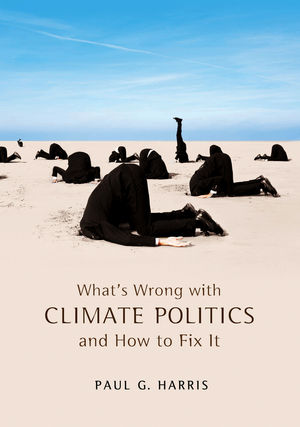
What's wrong with climate politics and how to fix it by Paul G. Harris.

WhatGovernments have failed to stem global emissions of carbon dioxide and other greenhouse gases causing climate change. Indeed, climate-changing pollution is increasing globally, and will do so for decades to come without far more aggressive action. What explains this failure to effectively tackle one of the world's most serious problems? And what can we do about it?

To answer these questions, Paul G. Harris looks at climate politics as a doctor might look at a very sick patient. He performs urgent diagnoses and prescribes vital treatments to revive our ailing planet before it's too late. 


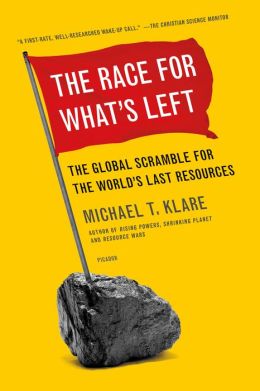
The race for what's left : the global scramble for the world's last resources by Michael T. Klare.

"A first-rate, well-researched wake-up call."---The Christian Science Monitor
"Outstanding…Exhaustively researched, beautifully written, and convincingly argued."---The Huffington Post
"Stunning."---Rolling Stone
"Reading this book, it’s hard not to think about postapocalyptic fiction….Think Margaret Atwood, Cormac McCarthy, and, most recent, Suzanne Collins’s Hunger Games. Yet novelists often skip over the messy parts along the road to dystopia. It’s scary to think that Klare, far from crying wolf, might be providing the sordid details in real time."---Science News
"If you think oil is the only major thing we’re running short of, think again.…Crisp, authoritative…A guidebook to wars to come."---Adam Hochschild, author of King Leopold’s Ghost

The strangest man : the hidden life of Paul Dirac, quantum genius by Graham Farmelo

Cover ArtThe first full biography of Paul Dirac, the greatest British physicist since Newton - and one of the strangest geniuses of the twentieth century, who may have suffered from autism. Paul Dirac was a pioneer of quantum mechanics and was regarded as an equal by Albert Einstein. He predicted, purely from what he saw in his equations, the existence of antimatter. The youngest person ever to win the Nobel Prize for Physics, he was also pathologically reticent, strangely literal-minded and almost completely unable to communicate or empathise. His silences were legendary and when he spoke, he betrayed no emotion. Through his greatest period of productivity, his postcards home contained only remarks about the weather. He is said to have cried only once, when his friend Einstein died. 

Higgs : the invention and discovery of the 'God Particle' by Jim Baggott.

Cover ArtThe hunt for the Higgs particle has involved the biggest, most expensive experiment ever. So exactly what is this particle? Why does it matter so much? What does it tell us about the Universe? Did the discovery  finish the search? And was finding it really worth all the effort? The short answer is yes. The Higgs field is proposed as the way in which particles gain mass - a fundamental property of matter. It's the strongest indicator yet that the Standard Model of physics really does reflect the basic building blocks of our Universe. Little wonder the hunt and discovery of this new particle produced such intense media interest. Jim Baggott explains the science behind the discovery, looking at how the concept of a Higgs field was invented, how the vast experiment was carried out, and its implications on our understanding of all mass in the Universe.

Why animals matter : animal consciousness, animal welfare and human well-being by Marian Stamp Dawkins.

Cover Art
In a world increasingly concerned with climate change, food security, and other human issues, the welfare of non-human animals is in danger of being overlooked and side-lined. Using the latest scientific research on animal consciousness and emotions, Marian Stamp Dawkins argues that if animal welfare is to be taken seriously by world opinion, it needs a complete rethink. She asks important questions such as: are we justified in projecting human emotions on to animals?


Cover Art Albatross : their world, their ways / Tui De Roy, Mark Jones, Julian Fitter.
The albatross is a creature of legend, of poetry and of dreams. It is the ultimate nomad, whose sailplane wings - the longest of any living bird - harness the shrieking winds of the southern ocean as it glides around the globe. This master of wind and wave is also the subject of intense scientificscrutiny and fascinating revelations. But just as we are discovering the magic of these glorious birds, they are becoming increasingly threatened; today, over three-quarters of all albatross species are edging towards extinction. A celebration of these amazing creatures and a call to ensure their future survival.